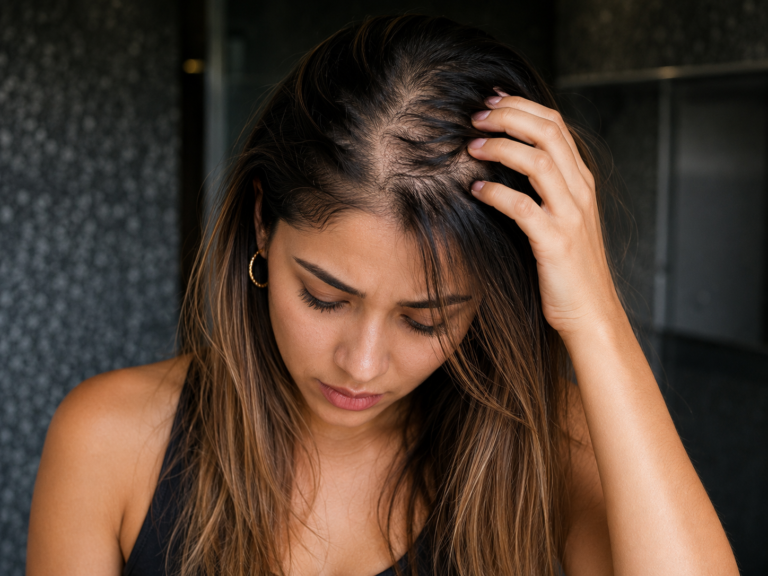
Seeing more hair in your brush or noticing that your ponytail feels thinner can be alarming. Hair loss in women is more common than many people realize, affecting millions worldwide at different stages of life. While losing 50 to 100 hairs a day is a normal part of the hair growth cycle, excessive shedding or gradual thinning deserves attention.
The good news is that many types of hair loss in women can be treated or improved once the underlying cause is identified. From hormonal changes to nutritional deficiencies, understanding why hair loss happens is the first step toward choosing treatments backed by science instead of marketing hype.
The Science Behind Hair Loss in Women
Healthy hair follows a continuous growth cycle with three phases:
- Anagen (growth phase): Lasts between 2 and 7 years.
- Catagen (transition phase): Lasts about 2 weeks.
- Telogen (resting phase): Lasts around 3 months before the hair naturally sheds.
Most hair is normally in the growth phase. Hair loss occurs when more follicles enter the resting phase too soon or when hair follicles gradually shrink.
Female Pattern Hair Loss (Androgenetic Alopecia)
The most common cause of chronic hair thinning in women is female pattern hair loss, also known as androgenetic alopecia.
Unlike men, women usually don’t develop a receding hairline. Instead, they experience:
- A widening part
- Reduced hair density
- Thinning over the crown
- Overall loss of volume
Genetics and hormones, especially sensitivity to dihydrotestosterone (DHT), play major roles. Over time, affected hair follicles become smaller and produce finer, shorter hairs.
Telogen Effluvium
This temporary form of hair loss causes noticeable shedding across the entire scalp.
Common triggers include:
- Emotional stress
- Surgery
- High fever
- Rapid weight loss
- COVID-19 or other illnesses
- Iron deficiency
- Low protein intake
- Thyroid disorders
Hair shedding usually begins two to three months after the triggering event, making it easy to overlook the cause.
Hormonal Changes
Women’s hormones strongly influence hair growth.
Hair thinning may occur during:
- Pregnancy (after delivery)
- Perimenopause
- Menopause
- Polycystic ovary syndrome (PCOS)
- Changes in hormonal birth control
Lower estrogen levels during menopause can shorten the hair growth cycle and contribute to thinner hair.
Alopecia Areata
This autoimmune condition causes the immune system to attack healthy hair follicles, leading to smooth, round patches of hair loss.
It often requires evaluation and treatment by a dermatologist.
Nutritional Deficiencies
Hair follicles are among the body’s most active tissues and require adequate nutrients to function properly.
Deficiencies linked to hair loss include:
- Iron
- Vitamin D
- Vitamin B12
- Zinc
- Protein
Supplementing only helps when a true deficiency exists. More is not necessarily better.
Best Products That Actually Work
The following products are widely available through Amazon and have strong reputations based on dermatology recommendations and published research.
1. Women’s Rogaine 5% Minoxidil Foam
Why it’s recommended
Minoxidil is the only FDA-approved over-the-counter treatment for female pattern hair loss.
Key active ingredient
- 5% Minoxidil
How it works
It prolongs the growth phase of hair follicles and stimulates thicker hair growth over time.
Who should use it
Women with hereditary thinning or early female pattern hair loss.
How to use
Apply once daily to a dry scalp exactly as directed.
Visible improvement usually requires 3 to 6 months of consistent use.
Precautions
Temporary increased shedding may occur during the first several weeks as older hairs are replaced.
2. Nizoral A-D Anti-Dandruff Shampoo
Why it’s recommended
A healthy scalp creates a better environment for healthy hair growth.
Key active ingredient
- 1% Ketoconazole
How it works
Helps control dandruff and scalp inflammation. Some research also suggests ketoconazole may reduce DHT activity on the scalp.
Who should use it
Women with dandruff, scalp irritation, or oily scalp.
How to use
Use two to three times weekly.
Leave on the scalp for several minutes before rinsing.
Precautions
Daily use may cause dryness in some people.
3. Viviscal Women’s Hair Growth Supplements
Why it’s recommended
Clinical studies have shown improvements in hair thickness and reduced shedding in some women after several months of use.
Key active ingredients
- Marine collagen complex
- Biotin
- Zinc
- Vitamin C
How it works
Provides nutrients that support normal hair growth.
Who should use it
Women experiencing temporary thinning or nutritional support needs.
How to use
Take twice daily according to package instructions.
Precautions
Contains fish-derived ingredients.
4. Nutrafol Women
Why it’s recommended
Nutrafol targets multiple contributors to hair thinning, including stress, inflammation, and nutritional factors.
Key active ingredients
- Saw palmetto
- Ashwagandha
- Marine collagen
- Curcumin
- Biotin
How it works
Supports healthier hair growth by addressing several biological pathways involved in hair thinning.
Who should use it
Women with gradual hair thinning.
How to use
Take the recommended daily serving with food.
Precautions
Evidence is promising but not as extensive as that for minoxidil.
5. The Ordinary Multi-Peptide Serum for Hair Density
Why it’s recommended
An affordable leave-in serum designed to support fuller-looking hair.
Key active ingredients
- Multi-peptide complex
- Caffeine
- Plant extracts
How it works
Supports scalp health and improves the appearance of hair density.
Who should use it
Women with early thinning or reduced hair volume.
How to use
Massage a few drops into the scalp every evening.
Precautions
Best results require long-term, consistent use.
6. Mielle Rosemary Mint Scalp & Hair Strengthening Oil
Why it’s recommended
Helps moisturize the scalp and reduce hair breakage.
Key active ingredients
- Rosemary oil
- Peppermint oil
- Biotin
How it works
Conditions the scalp and strengthens hair strands, reducing breakage rather than stimulating significant new growth.
Who should use it
Women with dry, damaged, or brittle hair.
How to use
Massage a small amount into the scalp before shampooing or apply lightly to hair ends.
Precautions
Avoid applying to irritated or sensitive skin. Perform a patch test before first use.
Common Mistakes Women Make
Ignoring Early Hair Thinning
Waiting too long allows hair follicles to shrink further, making treatment less effective.
The better approach: Start evidence-based treatment early and consult a dermatologist if hair loss continues for more than three months.
Assuming Hair Oils Can Reverse Hair Loss
Natural oils may improve hair condition but cannot reverse genetic hair loss.
The better approach: Use oils to reduce breakage while relying on clinically proven treatments for hair regrowth.
Taking Large Amounts of Biotin Without Testing
Biotin supplements are often unnecessary and may interfere with certain laboratory tests.
The better approach: Only supplement when recommended by a healthcare professional or when a deficiency is confirmed.
Wearing Tight Hairstyles Every Day
Constant pulling stresses hair follicles and may lead to traction alopecia.
The better approach: Choose loose hairstyles whenever possible and limit prolonged tension.
Ignoring Medical Conditions
Hair loss may be the first sign of iron deficiency, thyroid disease, PCOS, or hormonal changes.
The better approach: Persistent, sudden, or severe hair loss should always be medically evaluated.
Expecting Fast Results
Hair grows slowly, and even effective treatments require patience.
The better approach: Stay consistent for at least three to six months before judging whether a treatment is working.
Final Thoughts
Hair loss in women is often caused by a combination of genetics, hormones, stress, nutrition, and overall health. While countless products promise instant regrowth, only a few have strong scientific evidence behind them. Minoxidil remains the most effective over-the-counter treatment for female pattern hair loss, while maintaining a healthy scalp, correcting nutrient deficiencies, and treating underlying medical conditions can significantly improve results.
The most successful approach is to identify the cause of your hair loss rather than chasing quick fixes. With patience, consistent care, and evidence-based treatments, many women can reduce shedding, improve hair density, and maintain healthier hair over the long term.