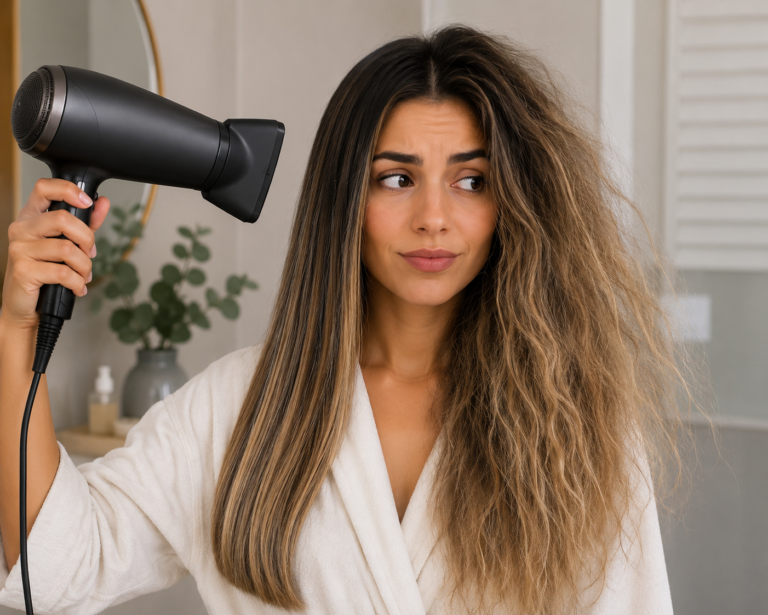
If you’ve ever stepped out of the shower with high hopes and ended up with a halo of frizz two hours later, you’re not alone. Air drying sounds simple in theory, but the reality is that most of us are doing it in a way that practically invites frizz to the party.
The good news? Learning how to air dry hair without frizz isn’t about luck or “good hair days.” It comes down to technique, timing, and the right products working together. Once you understand what’s actually happening to your strands as they dry, you can build a routine that gives you smooth, touchable hair without ever picking up a blow dryer.
This guide breaks down exactly why air drying causes frizz, the step-by-step method that solves it, and the products worth adding to your routine — whether you have straight, wavy, curly, or coily hair.
Why Air Drying Causes Frizz
Frizz isn’t random. It’s your hair cuticle reacting to its environment, and once you understand the mechanics, it’s much easier to prevent.
Each strand of hair is covered in a cuticle layer made of overlapping scales, similar to shingles on a roof. When those scales lie flat, hair looks smooth and reflects light beautifully. When they lift or separate, hair looks dull, rough, and frizzy.
A few key factors cause that cuticle to lift during air drying:
- Humidity. Hair is naturally porous, which means it absorbs moisture from the air. In humid conditions, that excess moisture swells the hair shaft and lifts the cuticle, creating frizz — especially for wavy and curly textures.
- Friction. Rubbing wet hair with a regular towel roughs up the cuticle layer almost instantly, which is one of the biggest (and most overlooked) causes of frizz.
- Hair porosity. High-porosity hair, often the result of color treatments, heat damage, or chemical processing, has a more open cuticle structure. That makes it especially prone to frizz because it absorbs and loses moisture quickly.
- Moisture loss. As hair dries unevenly or too quickly, the outer layer can lose hydration faster than the inner cortex, leaving strands rough and frizz-prone instead of smooth and hydrated.
Once you address humidity exposure, friction, and moisture retention, air drying stops being unpredictable and starts being consistent.
The Air-Drying Technique That Actually Works
This routine works for nearly every hair type, with small adjustments depending on texture. The goal is to lock in moisture and minimize disruption to the cuticle from the very first step.
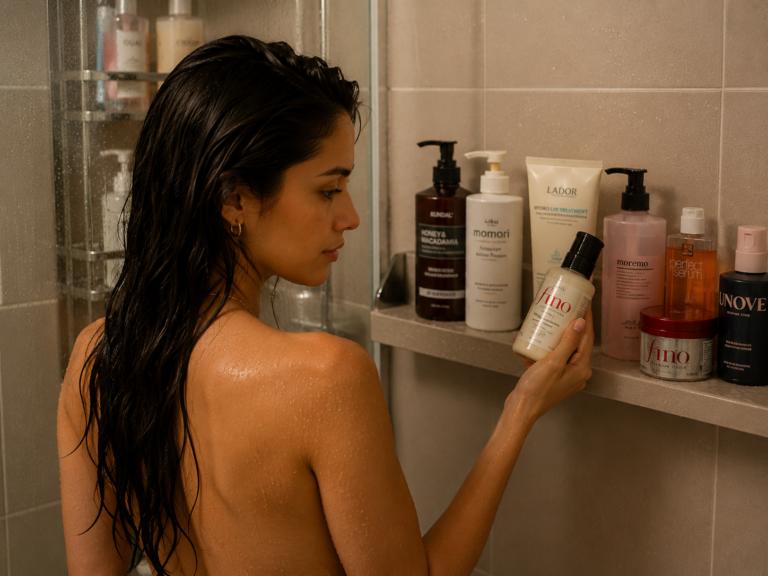
1. Wash with a moisturizing shampoo. Start with a sulfate-free, hydrating shampoo that cleanses without stripping natural oils. Stripped hair is more porous, which means more frizz later.
2. Use a nourishing conditioner. Focus conditioner from mid-length to ends, where hair is driest and most prone to frizz. This is where moisture retention really happens.
3. Gently squeeze out excess water. Cup sections of hair in your hands and squeeze upward toward the scalp. Never wring or twist — that’s a fast track to frizz and breakage.
4. Blot with a microfiber towel. Skip the cotton towel. A microfiber hair towel absorbs water without creating friction, which keeps the cuticle smooth instead of roughed up.
5. Apply leave-in conditioner. While hair is still damp, distribute a leave-in conditioner from mid-shaft to ends. This is your main defense against frizz-causing moisture loss.
6. Apply a lightweight serum or oil. A few drops of serum or oil seal the cuticle and add shine without weighing hair down. Focus on ends first, then lightly through the lengths.
7. Avoid touching hair while drying. This is the step most people skip — and it matters more than almost anything else. Touching, scrunching repeatedly, or running fingers through hair as it dries disrupts the cuticle and creates frizz, even after a perfect prep routine.
8. Let hair air dry to about 80%. Letting hair air dry most of the way before any additional styling helps the cuticle set smooth.
9. Finish with a diffuser on cool or low heat if needed. If you want extra polish or faster drying time, a diffuser on low heat helps set the style without disturbing texture or curl definition.
This is the core of an air dry routine that actually works, whether you’re working with an air drying routine for fine hair that needs lightweight products, or an air drying routine for thick hair that needs deeper hydration.
Adjusting for Different Hair Types
- How to air dry straight hair: Use lighter leave-in formulas and a small amount of serum to avoid limp, weighed-down strands.
- How to air dry wavy hair: Scrunch product in upward, then leave hair alone until mostly dry to encourage natural wave pattern.
- How to air dry curly hair: Use richer leave-in conditioners and creams, and consider the “praying hands” method to smooth product through curls without disrupting clumps.
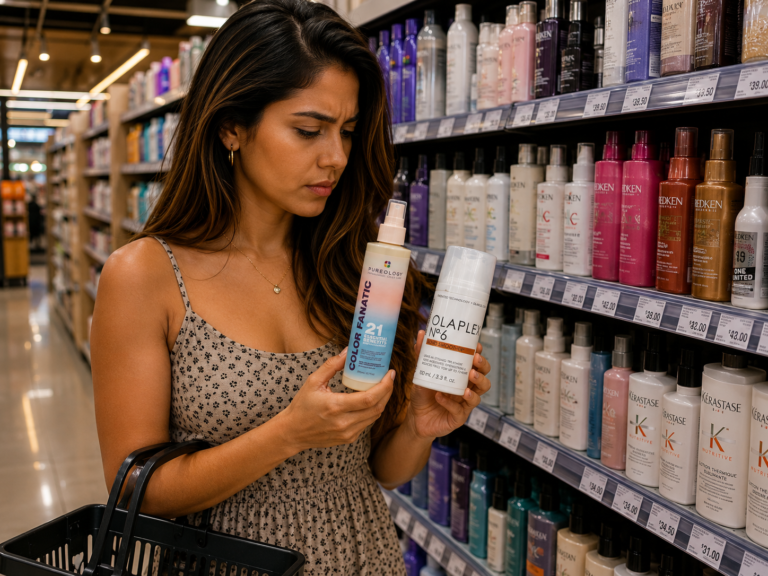
Best Amazon Products for Frizz-Free Air Drying
These are tried-and-true picks known for strong reputations among stylists and reviewers. Each one supports a different part of the routine above.
Moisturizing Shampoo: Olaplex No.4 Bond Maintenance Shampoo Why it works: Strengthens hair structure while cleansing gently, reducing breakage that contributes to frizz. Best hair type: Damaged, color-treated, or dry hair. Main benefits: Bond repair, moisture retention, smoother cuticle over time.
Conditioner: Olaplex No.5 Bond Maintenance Conditioner Why it works: Pairs with the shampoo to deeply hydrate and detangle without heaviness. Best hair type: All textures, especially damaged or chemically treated hair. Main benefits: Improved elasticity, reduced frizz, easier detangling.
Microfiber Hair Towel: Aquis Original Microfiber Hair Towel Why it works: Absorbs water quickly while minimizing the friction that lifts the cuticle. Best hair type: All hair types, especially curly and wavy textures. Main benefits: Faster drying, less frizz, gentler than cotton towels.
Leave-In Conditioner: It’s a 10 Miracle Leave-In Product Why it works: Lightweight yet deeply conditioning, with a cult following for taming frizz instantly. Best hair type: Dry, frizzy, or fine hair that needs moisture without buildup. Main benefits: Detangling, heat protection, smoother texture.
Hair Cream: Briogeo Curl Charisma Leave-In Conditioning Cream Why it works: Rich, rice amino-based formula that defines texture while controlling frizz. Best hair type: Wavy, curly, and coily hair. Main benefits: Curl definition, moisture retention, softness.
Hair Serum: John Frieda Frizz Ease Original Serum Why it works: A long-standing favorite for sealing the cuticle and controlling flyaways without greasiness. Best hair type: All hair types, especially frizz-prone or humidity-affected hair. Main benefits: Instant smoothness, shine, lightweight frizz control.
Hair Oil: Moroccanoil Treatment Original Why it works: Argan oil-based formula that nourishes ends and adds shine without weighing hair down. Best hair type: Dry, thick, or damaged hair. Main benefits: Deep nourishment, frizz control, added shine.
Heat Protectant: CHI 44 Iron Guard Thermal Protection Spray Why it works: Shields hair from heat damage if you finish with a diffuser, preserving moisture balance. Best hair type: All hair types using any heat styling. Main benefits: Heat protection, reduced breakage, smoother finish.
Diffuser Hair Dryer: InfinitiPro by Conair Hair Dryer with Diffuser Why it works: Distributes airflow evenly, enhancing natural texture without disrupting curl pattern. Best hair type: Wavy, curly, and coily hair that want extra polish. Main benefits: Faster drying, defined texture, reduced frizz from manual touching.
Common Air-Drying Mistakes That Cause Frizz
Even with the right products, small habits can undo your progress. Here are the most common mistakes — and how to fix them.
- Rubbing hair with a towel. This roughs up the cuticle instantly. Switch to blotting with a microfiber towel instead.
- Skipping leave-in conditioner. Without it, hair loses moisture too quickly as it dries. Always apply one on damp hair.
- Touching hair while drying. Constant touching disrupts the cuticle. Let hair dry undisturbed once products are applied.
- Using too much product. Overloading hair with serum or cream weighs it down and can look greasy. Start small and add more only if needed.
- Applying products to soaking wet hair incorrectly. Excess water dilutes product effectiveness. Blot first, then apply.
- Sleeping with wet hair. This creates friction against your pillowcase and disrupts cuticle alignment. Try to dry hair at least 80% before bed, or use a silk pillowcase.
- Brushing while drying. Brushing disrupts natural pattern and roughs up strands. Detangle gently before drying, not during.
- Using high heat without protection. Even diffuser heat can cause damage over time without a heat protectant. Always spray one on before any heat exposure.
- Ignoring hair porosity. Using the wrong product weight for your porosity level can leave hair either flat or frizzy. High-porosity hair typically needs richer, sealing products.
- Skipping regular trims. Split ends fray and contribute to overall frizz, no matter how good your routine is. Regular trims keep ends smooth.
The Bottom Line
Frizz-free air drying comes down to a consistent sequence: gentle washing, the right leave-in and sealing products, minimal friction, and patience while hair sets. Stick with this routine, choose products suited to your hair type and porosity, and avoid the common mistakes above, and you’ll notice smoother, healthier-looking hair with every wash. Consistency is what turns a good hair day into your everyday normal.