If you only invest in one skincare product, make it sunscreen. Daily sun protection is one of the most effective ways to prevent premature aging, dark spots, and skin cancer. Yet with hundreds of formulas available, choosing the right one can quickly become overwhelming.
The best face sunscreen is one you’ll actually enjoy wearing every day. Whether you have oily, dry, sensitive, or acne-prone skin, today’s formulas offer lightweight textures, invisible finishes, and excellent UV protection. In this guide, we’ll explain what makes a sunscreen effective and share six dermatologist-recommended options that consistently receive high ratings on Amazon and from skincare professionals.
The Science Behind Sunscreen
Ultraviolet (UV) radiation from the sun damages the skin even on cloudy days.
There are two main types of UV rays that affect your skin:
UVA Rays
UVA rays penetrate deeply into the skin and are primarily responsible for:
- Premature aging
- Wrinkles
- Loss of firmness
- Hyperpigmentation
UVB Rays
UVB rays mainly affect the skin’s surface and are responsible for:
- Sunburn
- DNA damage
- Increased risk of skin cancer
This is why dermatologists recommend using a broad-spectrum sunscreen, which protects against both UVA and UVB rays.
Mineral vs. Chemical Sunscreens
Mineral sunscreens use ingredients like zinc oxide and titanium dioxide to protect the skin from UV rays. They are often recommended for sensitive skin because they’re less likely to cause irritation.
Chemical sunscreens contain UV filters such as avobenzone, octocrylene, and octisalate that absorb UV energy before it damages the skin. Modern formulas are lightweight and generally blend into the skin without leaving a white cast.
For everyday use, dermatologists recommend an SPF of 30 or higher, applied generously and reapplied every two hours when outdoors.
Best Products to Use
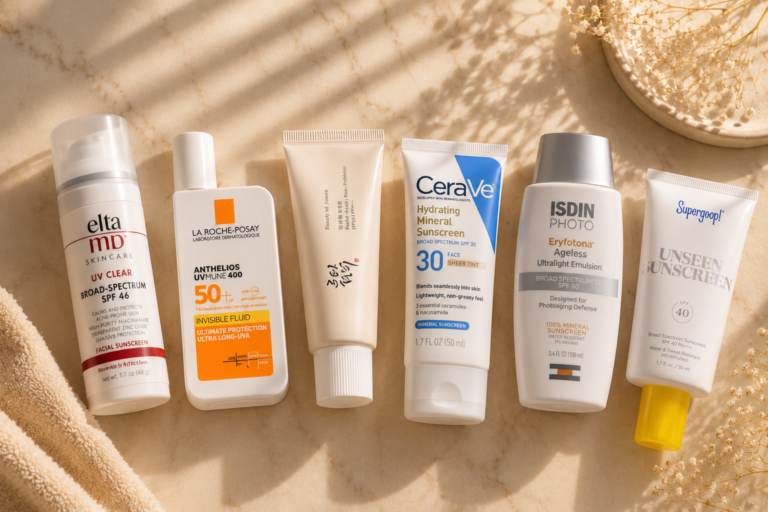
1. EltaMD UV Clear Broad-Spectrum SPF 46
Why it’s recommended
One of the most dermatologist-recommended facial sunscreens thanks to its lightweight texture and suitability for sensitive and acne-prone skin.
Key active ingredients
- Zinc oxide
- Niacinamide
How it works
Provides broad-spectrum UV protection while helping calm redness and support the skin barrier.
Who should use it
Sensitive, acne-prone, combination, and rosacea-prone skin.
How to use
Apply generously as the final step of your morning skincare routine, at least 15 minutes before sun exposure.
Precautions
Reapply every two hours when spending time outdoors.
2. La Roche-Posay Anthelios UVMune 400 Invisible Fluid SPF 50+
Why it’s recommended
A lightweight sunscreen known for its excellent UVA protection and invisible finish.
Key active ingredients
- Mexoryl 400
- Avobenzone
- Modern UV filters
How it works
Provides very high broad-spectrum protection while feeling almost weightless on the skin.
Who should use it
Normal, combination, oily, and sensitive skin.
How to use
Shake well before applying generously to the face and neck.
Precautions
Reapply after swimming, sweating, or towel drying.
3. Beauty of Joseon Relief Sun: Rice + Probiotics SPF 50+
Why it’s recommended
A Korean sunscreen that has become a favorite for its moisturizing texture and completely invisible finish.
Key active ingredients
- Modern UV filters
- Rice extract
- Probiotics
How it works
Protects against UV damage while providing lightweight hydration.
Who should use it
Normal, dry, combination, and sensitive skin.
How to use
Apply as the final skincare step every morning.
Precautions
Use the recommended amount for full SPF protection.
4. CeraVe Hydrating Mineral Sunscreen SPF 30 Face Lotion
Why it’s recommended
A gentle mineral sunscreen developed with dermatologists to support the skin barrier.
Key active ingredients
- Zinc oxide
- Titanium dioxide
- Ceramides
How it works
Reflects UV rays while helping maintain hydration and strengthen the skin barrier.
Who should use it
Dry and sensitive skin.
How to use
Apply evenly over the face and neck before sun exposure.
Precautions
Blend thoroughly to minimize any white cast.
5. ISDIN Eryfotona Ageless SPF 50
Why it’s recommended
A premium sunscreen that combines high UV protection with ingredients that help support healthier-looking skin.
Key active ingredients
- Zinc oxide
- DNA Repairsomes®
- Peptides
How it works
Protects against UV damage while helping improve the appearance of photoaged skin.
Who should use it
People concerned about sun damage, fine lines, and uneven skin tone.
How to use
Apply every morning as the final skincare step.
Precautions
Consistent daily use provides the best long-term benefits.
6. Supergoop! Unseen Sunscreen SPF 40
Why it’s recommended
Its invisible, silicone-based texture works well under makeup and leaves no white cast.
Key active ingredients
- Avobenzone
- Homosalate
- Octisalate
- Octocrylene
How it works
Provides broad-spectrum protection while smoothing the skin’s surface for a primer-like finish.
Who should use it
Normal, oily, combination, and makeup wearers.
How to use
Apply generously before makeup as the last step in your skincare routine.
Precautions
Remember to reapply throughout the day, even if wearing makeup.
Common Mistakes
Applying Too Little Sunscreen
Most people apply only a fraction of the amount needed to achieve the labeled SPF.
Correct approach: Use approximately two finger lengths of sunscreen for the face and neck.
Skipping Sunscreen on Cloudy Days
Up to 80% of UV rays can penetrate clouds.
Correct approach: Wear sunscreen every morning, regardless of the weather.
Forgetting to Reapply
Sunscreen gradually loses effectiveness with time, sweating, and rubbing.
Correct approach: Reapply every two hours when outdoors and immediately after swimming or excessive sweating.
Choosing Sunscreen Based Only on SPF
A high SPF doesn’t guarantee complete protection.
Correct approach: Look for broad-spectrum protection and a formula that suits your skin type.
Avoiding Sunscreen Because It Feels Heavy
Older sunscreens were often greasy, but modern formulas are much lighter.
Correct approach: Experiment with different textures, such as fluids, gels, or lightweight creams, until you find one you’ll wear daily.
Final Thoughts
The best face sunscreen is the one that fits your skin type and becomes a non-negotiable part of your daily routine. Whether you prefer the soothing protection of EltaMD UV Clear, the lightweight finish of La Roche-Posay Anthelios, the hydrating feel of Beauty of Joseon Relief Sun, or the invisible texture of Supergoop! Unseen Sunscreen, consistent use is what truly makes the difference.
No serum or moisturizer can undo daily UV damage. By wearing a broad-spectrum sunscreen every morning and reapplying it when needed, you’ll help protect your skin from premature aging, hyperpigmentation, and skin cancer while supporting healthier skin for years to come.